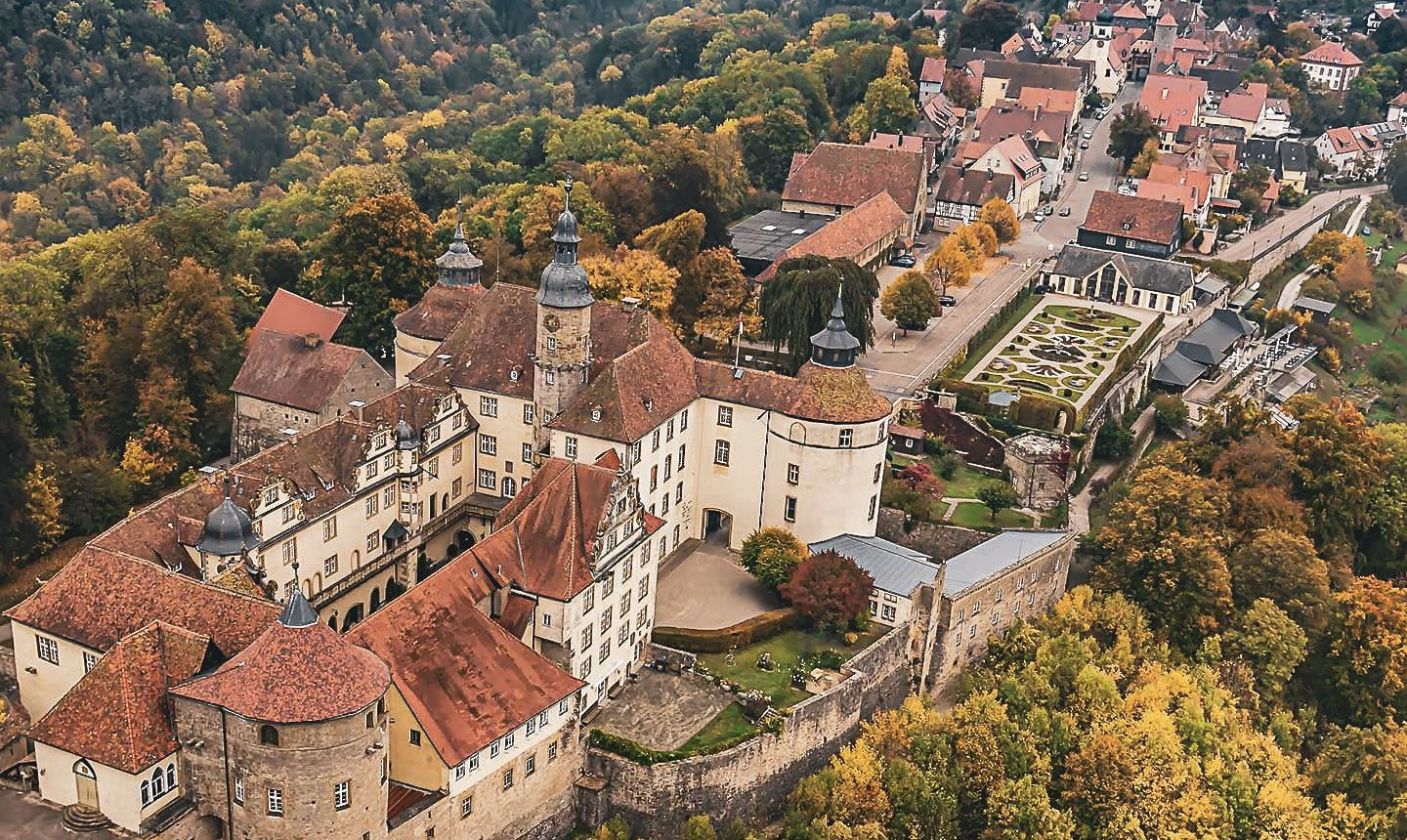
LORD, STAY WITH US ...
Grand Crossover Organ Concert and Lecture on Langenburg 400 Years Ago
Sunday, September 13, 2026, 6–8 p.m.
Langenburg Evangelical Town Church
Open Monument Day | 800 Years of Langenburg
Welcome and Introduction: Pastor Elke Stephan
Organ: Bernhardt Brand-Hofmeister
Lecture: Gerd Ohlhauser
Organizer: Evangelical Parish of Langenburg
This public event marked the conclusion of a gathering of the von Olnhausen and Ohlhauser families—from Germany and abroad—held in Langenburg on September 13, 2026. The day’s events are documented in the following materials. Donations from the concert and lecture benefited the Langenburg Protestant Town Church and are designated for the exterior renovation of the church building.
Greeting from the Ohlhauser gathering in Carbon, Alberta (Canada)
Photo gallery of the von Olnhausen and Ohlhauser gathering and the concert event
Program of the organ concert and lecture
Video clip of the organ concert and lecture
Welcome and introduction by Pastor Elke Stephan
"Lord, stay with us, for evening is falling" – Lecture by Gerd Ohlhauser
Inscriptions on the epitaph of Johann Heinrich von Olnhausen
Inscriptions on the epitaph of Johann Christoph Assum
On the soil of the ancestors – Hohenloher Tagblatt, September 17, 2026
The Siege of Langenburg in 1634, according to the account of Chamber Councillor Georg Friedrich Assum The Siege of Langenburg in 1634, Transcription/Translation The Round Chapel of Langenburg Castle – A Theological Appreciation by Elke Eberts
A sentence on an almost 330-year-old epitaph leads us right into the heart of Langenburg's history:
"Lord, stay with us, for it is getting late."
The epitaph commemorates Johann Heinrich von Olnhausen (1623–1677), the Hohenlohe chancellery secretary, and his wife, Magdalena Elisabeth. Their four children had it erected in 1695 in the town church of Langenburg.
What did the sentence mean back then? In the Gospel of Luke, the disciples on the road to Emmaus ask a stranger to stay with them because evening is falling. Only later do they recognize him as the risen Christ.
During the Thirty Years' War, the request takes on a different meaning. War, plague, famine, and plunder defined the lives of an entire generation. After the devastating defeat of the Protestant forces at Nördlingen in 1634, the small lordship of Hohenlohe-Langenburg also faced existential threat. The count's family was forced to leave Langenburg.
Who holds a lordship together when its rulers flee? Administrative officials remained behind. At their head was Chancellor Johann Christoph Assum, closely connected to several generations of the von Olnhausen family. Despite his wife's illness, Assum traveled to the imperial headquarters in Frankfurt and secured the continuation of the lordship of the underage count's children. On his return journey, he narrowly escaped a deadly attack on a Rothenburg delegation only because he visited his daughter and son-in-law, Georg Gabriel von Olnhausen, in Wertheim.
Gerd Ohlhauser's lecture follows these traces and simultaneously leads further back: to the familial connections of the von Olnhausen family with the Assums and the von Berlichingen families, and to that early Heinrich whom an old tradition describes as an "attempted rider."< This is not about a genealogy. It is about the question: On what foundation do we stand?
The lecture is presented between two sets of concerts by organist Bernhardt Brand-Hofmeister featuring international classical, film, and chart music. Music and lecture are interrelated. The opening piece, "Abide with me" already takes up the theme of the epitaph. Following the lecture are excerpts from György Ligeti's "Volumina"—a radical soundscape and, on this evening, a musical metaphor for the chaos of the Thirty Years' War.